



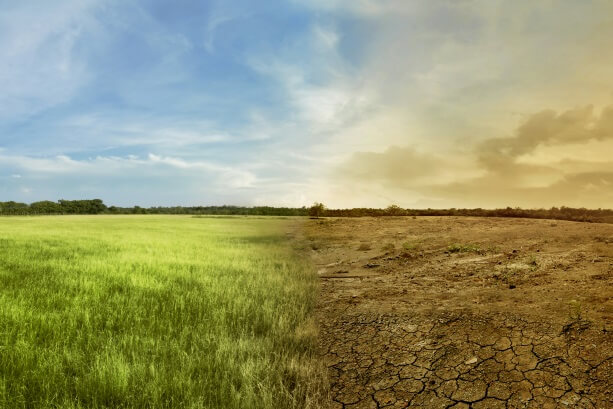
It is now undeniable that the climate is changing on a global scale. Europe is experiencing the worst heat wave in its modern history, while fires, floods and sky-high temperatures are making the headlines on a daily basis.
Human activity, such as the use of fossil fuels, deforestation and livestock, contribute to increased amounts of greenhouse gas emissions to the atmosphere, causing the greenhouse effect and global warming. Unfortunately, each of the last three decades has been warmer than the previous.
Who is affected?
Climate change affects all regions of the world. The ice is melting at the polls resulting to sea level rising, some areas are more often affected by extreme weather conditions and rainfall, while others are suffering from high-intensity heat waves and extensive periods of drought. At the same time the effects of climate change are expected to intensify in the coming decades.
Public health is also greatly affected by climate change. Those who are most likely to be affected are vulnerable groups, such as children, the elderly, the less privileged, those who are already suffering from illness and those who do not have access to public health services. The World Health Organisation (WHO) expects to see an increase in cardiovascular and respiratory diseases with temperature rise, as well as an increase in injuries, psychological disorders and, in some cases, even deaths from heavy and widespread heat waves, floods, storms, and other extreme weather conditions.
What is the cost?
Climate change is also affecting the global economy and not just public health.
Sectors like agriculture, forestry, energy and tourism, which are directly dependent on the temperature levels and rainfall, are greatly affected. Indicatively, between 1980 and 2011, floods affected more than 5.5 million people and caused direct economic losses of over €90 billion.
Climate change is also largely affecting many plant and animal species, which are trying to adapt to the new climatic conditions. For example it has been observed that many inland species, as well as fresh water and seawater species are moving to new areas. If the average temperature of the planet continues to rise uncontrollably then certain plant and animal species will be facing serious risk of extinction.
How do we face the challenge?
In an effort to respond to these new challenges the European Union (EU) has set climate change mitigation and adaptation as a major priority. Based on this priority, the EU has set up a special sub-programme for Climate Action under the LIFE Programme, which is the EU’s financial instrument for the environment and climate action. The general objective of the LIFE Programme is to contribute to the implementation, updating and development of EU environmental and climate policy and legislation by co-financing projects with European added value. Those who can benefit from this Programme are public bodies, non-governmental organisations, local authorities, universities, as well as private companies and organisations.
This sub-programme covers three priority areas, vis-à-vis, mitigation of Climate Change, adaptation to Climate Change and Climate Governance and Information.
The LIFE Programme has funded since 1992 more than 45 projects in Cyprus with a total budget exceeding 45 million euros. An example of such a project that is currently funded by the LIFE Programme is the LIFE MEDEA project (LIFE16 CCA / CY / 000041), which aims to demonstrate the feasibility and effectiveness of an adaptation strategy to Desert Dust Storms, and to better inform EU policy-making by providing a field-based evidence for the adoption of a strategic plan for mitigating the health effects of DDS events in south-east Europe. From a policy point of view, the project aims to enhance informed decision-making along with the population’s resilience, preparedness and capacity to respond to the impacts of climate change, in line with the EU adaptation strategy.
The implementation of the various policies and procedures is very important and the LIFE Programme is working towards this end. This is emphasized even more through the statement of Mr. Hans Bruyninckx, Executive Director of the European Environment Agency: “Climate change will continue for many decades to come. The scale of future climate change and its impacts will depend on the effectiveness of implementing our global agreements to cut greenhouse gas emissions, but also ensuring that we have the right adaptation strategies and policies in place to reduce the risks from current and projected climate extremes.”
Find out more about the LIFE Programme here. To see whether your idea can be funded by the LIFE Programme contact us today.
Author: Panos Kakonitis, Climate Change Expert